Water Voles Could Be Set for River Brent Return
Project run by environmental groups with Ealing Council gets funding
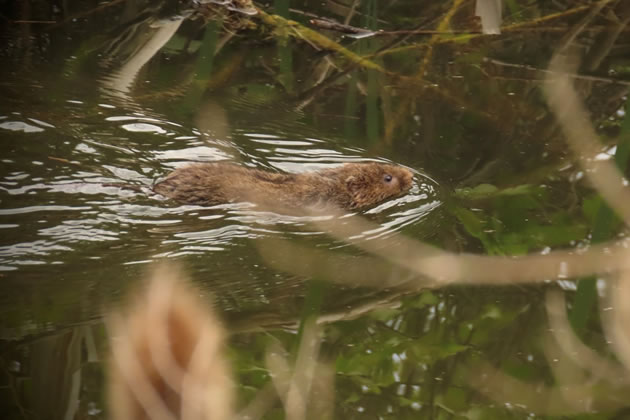 Water voles have been declared extinct in the local river
October 7, 2026
Water voles could return to the River Brent after a £146,700 project to restore habitats and improve biodiversity along the river.
The funding has been awarded by Thames Water through its Enhance the River Grant and will support a partnership between environmental charity Thames21 and Ealing Council, working with Citizen Zoo and Ealing Wildlife Group.
The project, called People, River, Voles: A Shared Restoration Journey on the River Brent, will focus on a 12-kilometre stretch of the river. It is also supported by the Mayor of London through funding for the West London Regional Park.
The long-term aim is to create the conditions needed for water voles to return to the Brent, where they have been declared locally extinct.
Water voles were once widespread across Britain but have suffered a substantial decline. The species plays an important role in river and wetland ecosystems, with its grazing helping to control riverside vegetation and its burrowing contributing to soil health.
The restoration programme will address some of the factors that have affected the ecological health of the Brent, including historic modifications, invasive species, pollution and fragmented habitats.
Work will include creating and reconnecting habitats, expanding reedbeds, reprofiling riverbanks and removing obsolete structures. Invasive species will also be managed and floating reedbeds installed to provide additional habitat for wildlife.
Thames21 says the work will help create a better-connected habitat for water voles while improving the river environment for other wildlife and local communities.
Chris Coode, chief executive of Thames21, said the project would give water voles "a real chance to return to the River Brent".
“By restoring natural river processes, creating richer bankside vegetation and improving water quality we’re transforming this constrained stretch of river into a thriving corridor for wildlife,” he said.
The project will also involve local residents and community groups in restoration and conservation work.
Dr Sean McCormack, Conservation and Rewilding Officer at Ealing Wildlife Group, said the organisation had been discussing the return of water voles to the Brent for several years.
“Following a successful programme to restore Harvest Mice to the borough’s meadows and wetlands, and a fantastic collaboration with Citizen Zoo, Horsenden and Ealing Council on the Ealing Beaver Project, it’s time for water voles to be reinstated as part of our local fauna,” he said.
“Our wonderful community volunteers will be invited to get involved.”
Citizen Zoo has been involved in water vole restoration work since 2017, including a reintroduction project on the River Hogsmill in south-west London.
Elliot Newton, Director of Rewilding at Citizen Zoo, said water voles had been declared locally extinct on the River Brent but that restoration work could help create the conditions for their return.
“While human activities have contributed to their decline, we have seen that when communities, conservation organisations and local authorities work together, we can reverse these losses and bring nature back to our towns and cities,” he said.
A future reintroduction is not part of the immediate habitat restoration work. The aim initially is to create suitable sheltered habitats and refuge areas capable of supporting water voles should a reintroduction take place.
The River Brent project forms part of the wider West London Regional Park programme, which aims to connect more than 500 hectares of parks, rivers, canals, wetlands and routes across Ealing and Hounslow.
The programme is intended to create a connected landscape for nature, climate resilience and recreation, while improving opportunities for residents to access green spaces.
Cllr Lauren Wall, Ealing Council's Cabinet Member for Thriving Communities, said the Brent project would demonstrate how the Regional Park could benefit both people and nature.
“By improving habitats along the River Brent and supporting the return of water voles, we're helping to create a greener, more biodiverse environment while giving residents more opportunities to connect with the natural world on their doorstep,” she said.
The wider Regional Park programme is backed by £1,459,696 from the Mayor of London and £999,595 from The National Lottery Heritage Fund through the Nature Towns and Cities programme.
The partnership developing the Regional Park includes Ealing Council, Hounslow Council, the Greater London Authority, the National Trust, the Environment Agency and the Canal & River Trust.
The Brent project also forms part of wider efforts to improve London's waterways, including the Mayor of London's Clean Rivers and Waterways Plan published in July 2026.
Thames Water's Healthy Rivers Community Manager Paul Hampton said the company recognised that pollution, including from its wastewater network, could affect river health.
“We recognise that pollution, including from our wastewater network, can impact river health and that we have an important role to play in improving the environment,” he said.
He added that the company was undertaking what it described as the biggest upgrade to its wastewater infrastructure in more than 150 years.
The restoration of the Brent is expected to provide benefits for a range of species, while the longer-term ambition is to see water voles once again become part of the river's wildlife.
If suitable habitat can be established and maintained, the project could therefore lay the groundwork for the return of one of Britain's best-known river mammals to a stretch of the Brent from which it has disappeared.
Like Reading Articles Like This? Help Us Produce More This site remains committed to providing local community news and public interest journalism. Articles such as the one above are integral to what we do. We aim to feature as much as possible on local societies, charities based in the area, fundraising efforts by residents, community-based initiatives and even helping people find missing pets. We’ve always done that and won’t be changing, in fact we’d like to do more. However, the readership that these stories generates is often below that needed to cover the cost of producing them. Our financial resources are limited and the local media environment is intensely competitive so there is a constraint on what we can do. We are therefore asking our readers to consider offering financial support to these efforts. Any money given will help support community and public interest news and the expansion of our coverage in this area. A suggested monthly payment is £8 but we would be grateful for any amount for instance if you think this site offers the equivalent value of a subscription to a daily printed newspaper you may wish to consider £20 per month. If neither of these amounts is suitable for you then contact info@neighbournet.com and we can set up an alternative. All payments are made through a secure web site. One-off donations are also appreciated. Choose The Amount You Wish To Contribute. If you do support us in this way we’d be interested to hear what kind of articles you would like to see more of on the site – send your suggestions to the editor. For businesses we offer the chance to be a corporate sponsor of community content on the site. For £30 plus VAT per month you will be the designated sponsor of at least one article a month with your logo appearing if supplied. If there is a specific community group or initiative you’d like to support we can make sure your sponsorship is featured on related content for a one off payment of £50 plus VAT. All payments are made through a secure web site. |