South Asian People Urged to Take Part in Medical Research
Southall man makes plea after heart condition found during clinical study
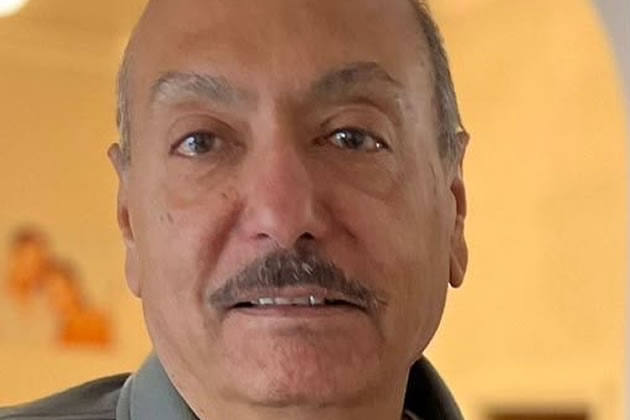
Harjit Ahluwalia was found to have an abnormal heart rhythm
July 29, 2026
A Southall man is encouraging more people of South Asian heritage to take part in health research after an undiagnosed heart condition was discovered when he volunteered for a clinical study through his GP.
Harjit Ahluwalia, 68, took part in a research trial investigating a vaccine for Respiratory Syncytial Virus (RSV) — a common infection that can cause serious illness in older adults. During a routine heart trace, known as an electrocardiogram, researchers found that Mr Ahluwalia had an abnormal heart rhythm, prompting further medical checks and treatment.
The discovery, he says, changed his understanding of his own health and inspired him to speak out during South Asian Heritage Month to encourage others to get involved in research. “One of the things I discovered through taking part in a study was that I had an abnormal heart rhythm,” he said. “I found out something was wrong with my body before I even realised it myself. To anyone thinking of taking part in research, I would say go for it — you have nothing to lose and you might find something out about your body that you were not aware of before.”
Mr Ahluwalia, who lives in Southall with his wife Rajbir, was one of nearly 879,000 people who took part in research studies across England in 2025/26, according to the National Institute for Health and Care Research (NIHR). Almost 200,000 participants were based in London, including more than 3,000 of Asian ethnicity. The figures highlight the growing importance of community participation in medical research, particularly among groups that remain under-represented.
Abnormal heart rhythms, or arrhythmias, affect more than two million people in the UK and can range from harmless to life-threatening. They may be caused by coronary heart disease, high blood pressure, valve problems or inherited conditions such as Brugada syndrome.
Mr Ahluwalia has since taken part in further studies, including a trial for a new flu vaccine, and says research has given him a deeper appreciation of how science can improve lives. “I was always keen to find out more about research and that others should benefit in the future because I’m taking part now,” he said.
His GP, Dr Ivor Singh, who is funded by the NIHR to undertake research with patients, said diverse participation is vital to improving treatments. “We really value research participants like Harjit as we seek to support the government’s Ten Year Health Plan for England,” he said. “As we mark South Asian Heritage Month, we are particularly looking for more members of this community to take part in research.”
People interested in taking part can speak to their GP or visit the NIHR’s Be Part of Research website to find out more.
Like Reading Articles Like This? Help Us Produce More This site remains committed to providing local community news and public interest journalism. Articles such as the one above are integral to what we do. We aim to feature as much as possible on local societies, charities based in the area, fundraising efforts by residents, community-based initiatives and even helping people find missing pets. We’ve always done that and won’t be changing, in fact we’d like to do more. However, the readership that these stories generates is often below that needed to cover the cost of producing them. Our financial resources are limited and the local media environment is intensely competitive so there is a constraint on what we can do. We are therefore asking our readers to consider offering financial support to these efforts. Any money given will help support community and public interest news and the expansion of our coverage in this area. A suggested monthly payment is £8 but we would be grateful for any amount for instance if you think this site offers the equivalent value of a subscription to a daily printed newspaper you may wish to consider £20 per month. If neither of these amounts is suitable for you then contact info@neighbournet.com and we can set up an alternative. All payments are made through a secure web site. One-off donations are also appreciated. Choose The Amount You Wish To Contribute. If you do support us in this way we’d be interested to hear what kind of articles you would like to see more of on the site – send your suggestions to the editor. For businesses we offer the chance to be a corporate sponsor of community content on the site. For £30 plus VAT per month you will be the designated sponsor of at least one article a month with your logo appearing if supplied. If there is a specific community group or initiative you’d like to support we can make sure your sponsorship is featured on related content for a one off payment of £50 plus VAT. All payments are made through a secure web site. |