Heritage Conservation Highlighted at Ealing Civic Society Event
University of West London's Dr Efcharis Balodimou gives lecture
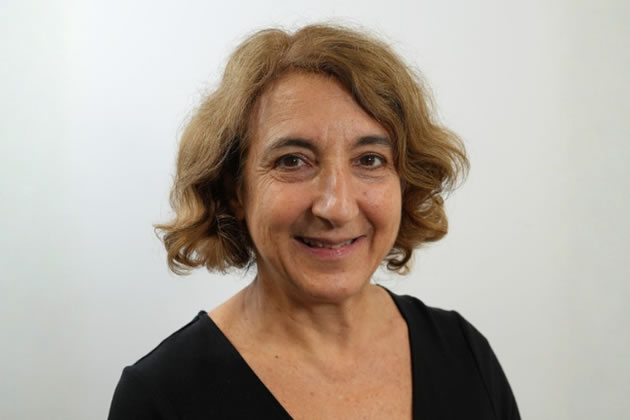 Dr Efcharis (Haroula) Balodimou
|
August 10, 2026
The future of heritage conservation took centre stage in Ealing last week as Dr Efcharis (Haroula) Balodimou, Senior Lecturer in the Built Environment at the University of West London, delivered a wide-ranging lecture on emerging technologies and the evolving role of architects in protecting historic buildings. Hosted by the Ealing Civic Society at Open Ealing in Dickens Yard, the event drew an engaged local audience keen to explore how innovation is reshaping the way communities safeguard their built heritage.
Dr Balodimou, who leads UWL’s Architectural Design Technology course, set out the case for conserving historic structures not only for their architectural merit but for their deeper cultural value — the way they anchor identity, memory and continuity within rapidly changing urban environments. Her talk, Innovation in Heritage Conservation: Emerging Practices and Future Directions, traced how new tools are transforming the discipline while still relying on the craft and judgement of conservation professionals.
Laser scanning, thermal imaging, digital surveying, artificial intelligence and 3D printing are now part of the conservation toolkit, she explained, offering ways to analyse, document and repair historic buildings with unprecedented precision. These technologies, she argued, do not replace traditional skills but enhance them, allowing architects to understand structural behaviour, diagnose deterioration and plan interventions with far greater accuracy.
To illustrate the point, Dr Balodimou turned to the restoration of Notre-Dame Cathedral in Paris — a project that has combined centuries-old craftsmanship with cutting-edge digital modelling and scanning. The cathedral’s reconstruction, she said, demonstrates how innovation and heritage values can work hand in hand to protect landmark buildings for future generations.
The lecture also highlighted UWL’s commitment to widening participation in technical fields. Dr Balodimou showcased the School of Computing and Engineering’s Women in STEM (WInSTEM) initiative, which promotes diversity across science, technology, engineering and mathematics and encourages more women to pursue careers in the built environment.
Reflecting on the evening, Dr Balodimou said it had been “a pleasure to speak with members of the Ealing Civic Society about the exciting developments taking place in heritage conservation”, emphasising that while digital technologies and artificial intelligence are transforming the sector, they “complement rather than replace the expertise of architects and conservation professionals”.
Indira Chauhan, Head of Subject for the Built Environment, said the invitation recognised the strength of UWL’s teaching and research. “Her presentation reflects the strength of our Built Environment team and our commitment to advancing sustainable and innovative approaches to heritage conservation while engaging with the wider community,” she said.
Alongside her public engagement work, Dr Balodimou is an active member of UWL’s Architecture, Construction and Urban Study Research Group and collaborates with the Faringdon Research Centre for Non-Destructive Testing and Remote Sensing. Her research focuses on applying non-destructive testing, remote sensing and digital technologies to the monitoring and preservation of historic structures — helping to develop new methods for protecting culturally significant sites.
Further information about the awards and the Society’s work can be found at ealingcivicsociety.org.
Like Reading Articles Like This? Help Us Produce More This site remains committed to providing local community news and public interest journalism. Articles such as the one above are integral to what we do. We aim to feature as much as possible on local societies, charities based in the area, fundraising efforts by residents, community-based initiatives and even helping people find missing pets. We’ve always done that and won’t be changing, in fact we’d like to do more. However, the readership that these stories generates is often below that needed to cover the cost of producing them. Our financial resources are limited and the local media environment is intensely competitive so there is a constraint on what we can do. We are therefore asking our readers to consider offering financial support to these efforts. Any money given will help support community and public interest news and the expansion of our coverage in this area. A suggested monthly payment is £8 but we would be grateful for any amount for instance if you think this site offers the equivalent value of a subscription to a daily printed newspaper you may wish to consider £20 per month. If neither of these amounts is suitable for you then contact info@neighbournet.com and we can set up an alternative. All payments are made through a secure web site. One-off donations are also appreciated. Choose The Amount You Wish To Contribute. If you do support us in this way we’d be interested to hear what kind of articles you would like to see more of on the site – send your suggestions to the editor. For businesses we offer the chance to be a corporate sponsor of community content on the site. For £30 plus VAT per month you will be the designated sponsor of at least two articles a month with your logo appearing if supplied. If there is a specific community group or initiative you’d like to support we can make sure your sponsorship is featured on related content for a one off payment of £50 plus VAT. All payments are made through a secure web site. |