Three New School Streets Start Operation this Month
Restrictions around Notting Hill & Ealing, Fielding Primary and Twyford CofE
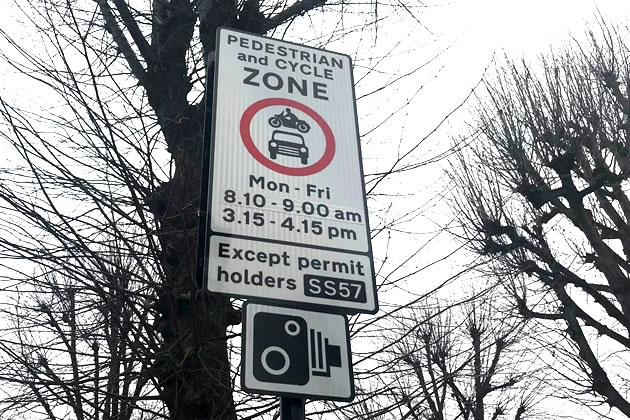
Ealing Council has a target of 50 School Streets across the borough
January 8, 2026
New School Street zones are due to come into force outside three local schools this month, as Ealing Council prepares to introduce timed traffic restrictions aimed at improving safety and encouraging more pupils to walk or cycle to school.
The Notting Hill & Ealing School zone restrictions will apply on weekdays between 7.45am and 8.45am and again between 2.45pm and 3.45pm. During these periods, motor vehicles will not be permitted to enter St Stephen’s Road between Wimborne Gardens and Edgehill Road, nor Limewood Close or the junction of Montague Road and Egerton Gardens. Residents and businesses located within the zone will be eligible for permits, and emergency vehicles will continue to have access.
The council’s School Streets page confirms that the scheme will operate during the school’s own term dates, which differ from the borough-wide calendar, and that enforcement will apply on school days during the morning and afternoon peaks.
The introduction of the scheme follows an independent evaluation commissioned by Ealing Council, which examined travel patterns at the school and feedback from parents, residents and staff. The report found that a majority of pupils already travel to school by active means such as walking, scooting or cycling, and that a significant proportion would prefer to do so if conditions were safer. Car use among pupils has fallen sharply since 2018, and the council argues that reducing vehicle movements at the school gates will further improve safety and air quality. It is part of a wider programme in which the council previously targeted implementing 50 School Streets by the end of this year.
However, the scheme has prompted strong reactions locally. A recent online discussion among residents revealed widespread confusion about which streets are included, how the signage will work and which term dates will be used for enforcement. Several residents expressed concern that drivers could be caught out by unclear signs or by the difference between the school’s independent term dates and the borough’s own calendar. Others questioned whether the scheme would simply push traffic onto neighbouring roads or whether it was being introduced primarily as a revenue-raising measure. Some residents also criticised the council for what they saw as a lack of transparency and for moving too quickly to implement restrictions without addressing concerns about displaced traffic or inconsistent signage. A few contributors raised broader objections to School Streets as part of a wider shift away from private car use. Despite this, other residents welcomed the scheme and said they hoped it would improve safety and reduce congestion around the school.
Fielding Primary School will also see its School Street come into effect on Monday 12 January. The school has confirmed the date on its website, which states that parents will not be permitted to drive into the zone during the main drop‑off and collection times unless they are residents or hold a valid permit. The restrictions will apply from 8.30am to 9.15am and from 3.00pm to 4.00pm. The affected streets include Bernard Avenue, Altenburg Avenue, the junction of Northcroft Road with Graham Avenue and Green Avenue, Wyndham Road, Midhurst Road from Claygate Road to Ridley Avenue, and Haslemere Avenue from Mervyn Road to Midhurst Road. The school describes the scheme as a way to create a safer, less congested environment for pupils walking, cycling or scooting to school. This information is confirmed on the school’s official page.
Twyford CofE High School’s School Street is confirmed to begin on 12 January, operating on weekdays from 7.45am to 8.45am and 2.45pm to 4.00pm during Twyford’s own term dates. The restrictions there will apply to Twyford Crescent, the residential street that runs directly past the school entrance.
Ealing Council maintains that these schemes are central to its Healthy Streets strategy, which aims to reduce car dependency and create safer, cleaner environments around schools. The evaluation report notes that staff and residents living within the proposed Notting Hill & Ealing zone were generally supportive, although parents and residents living outside the zone were more likely to oppose the plans.
Further information, including maps of the affected areas and details of exemptions, is available on the Ealing Council website and on the individual school pages.
Like Reading Articles Like This? Help Us Produce More This site remains committed to providing local community news and public interest journalism. Articles such as the one above are integral to what we do. We aim to feature as much as possible on local societies, charities based in the area, fundraising efforts by residents, community-based initiatives and even helping people find missing pets. We've always done that and won't be changing, in fact we'd like to do more. However, the readership that these stories generates is often below that needed to cover the cost of producing them. Our financial resources are limited and the local media environment is intensely competitive so there is a constraint on what we can do. We are therefore asking our readers to consider offering financial support to these efforts. Any money given will help support community and public interest news and the expansion of our coverage in this area. A suggested monthly payment is £8 but we would be grateful for any amount for instance if you think this site offers the equivalent value of a subscription to a daily printed newspaper you may wish to consider £20 per month. If neither of these amounts is suitable for you then contact info@neighbournet.com and we can set up an alternative. All payments are made through a secure web site. One-off donations are also appreciated. Choose The Amount You Wish To Contribute. If you do support us in this way we'd be interested to hear what kind of articles you would like to see more of on the site – send your suggestions to the editor. For businesses we offer the chance to be a corporate sponsor of community content on the site. For £30 plus VAT per month you will be the designated sponsor of at least one article a month with your logo appearing if supplied. If there is a specific community group or initiative you'd like to support we can make sure your sponsorship is featured on related content for a one off payment of £50 plus VAT. All payments are made through a secure web site. |